
Home » Alle berichten » Business » Strengthening long-term performance with an integrated business strategy that aligns every part of your organization
Strengthening long-term performance with an integrated business strategy that aligns every part of your organization
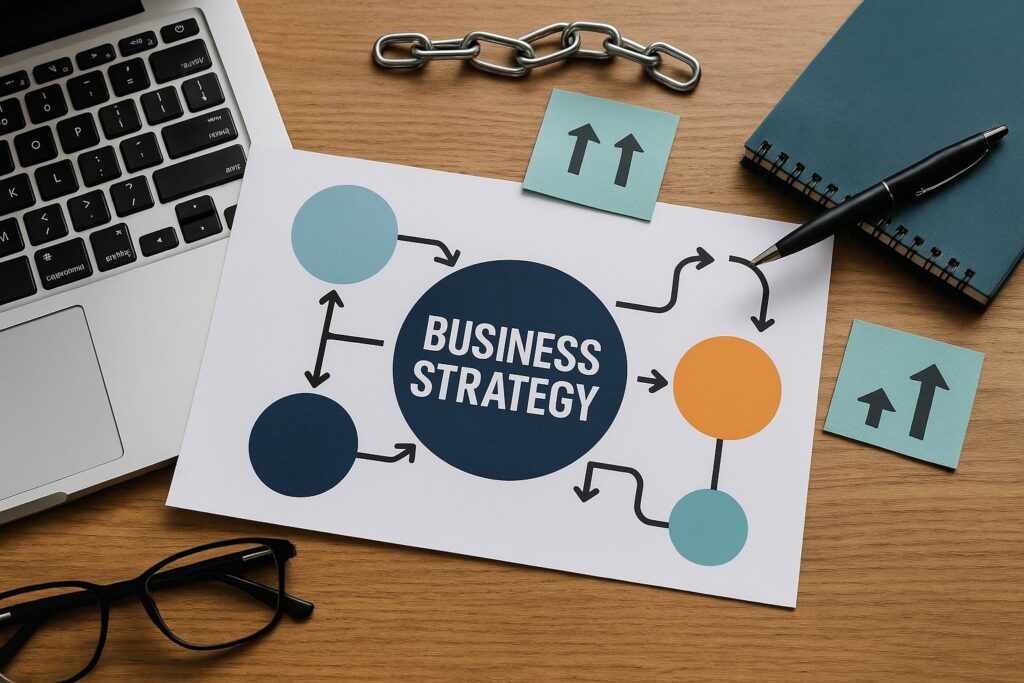
Modern organizations often struggle with fragmented operations, disconnected teams, and competing priorities. An integrated business strategy solves these problems by aligning decisions, resources, and processes across departments. Instead of treating functions like marketing, operations, finance, and product development as separate systems, an integrated approach creates a unified direction. This leads to faster execution, clearer accountability, and more consistent performance. When done well, it becomes the foundation for sustainable growth and organizational resilience in changing markets.
In short:
An integrated business strategy aligns teams, resources, and objectives across the entire organization.
Strong integration reduces internal friction and improves decision-making speed.
Transparent communication and shared metrics help keep departments moving in the same direction.
Technology, processes, and leadership must work together for integration to succeed.
Organizations using integrated strategies often adapt faster, innovate more effectively, and create stronger customer experiences.
Step-by-step: How to build an integrated business strategy
Creating integration across your organization may feel complex, but a structured process makes it manageable. These steps build the foundation for alignment and long-term performance.
Assess your current level of alignment by reviewing how departments plan, communicate, and measure success.
Define the overarching strategic objectives that guide the entire organization.
Identify dependencies between teams to understand where workflows intersect.
Develop shared KPIs that reflect outcomes relevant across departments.
Map cross-functional processes so responsibilities and handoffs are clearly defined.
Strengthen communication systems to ensure information flows effectively.
Integrate technology platforms so teams access the same data and insights.
Train leaders and employees to support integrated ways of working.
Pilot integration with a specific project to refine the process before expanding it.
Review performance regularly and adjust the strategy as the organization evolves.
How integrated business strategy improves operational efficiency
Integration removes the friction caused by fragmented systems and inconsistent processes. When departments share goals, workflows naturally become more streamlined. Teams know where to focus, how to coordinate, and how their decisions impact others.
Improved efficiency also comes from reducing duplicated work. Without integration, two or three departments may unknowingly build overlapping processes or tools. With a unified strategy, resources are used more efficiently and redundant efforts disappear.
Integration additionally improves speed. When decision-makers have clear information and alignment, responses to market changes become faster and more coordinated.
Using integrated business strategy to enhance customer experience
Customer experience improves when departments operate as a unified system. Customers do not see internal structures; they only feel consistency or inconsistency from the organization. An integrated strategy ensures that sales, service, operations, and marketing all deliver experiences that reflect the same brand values.
For example, when customer feedback flows easily between departments, product teams can innovate faster and support teams can resolve issues more effectively. When marketing understands operational capacity, the company avoids making promises it cannot deliver.
This alignment reduces frustration for both customers and employees and builds trust over time.
Also interesting



Step-by-step: How to build an integrated business strategy
Creating integration across your organization may feel complex, but a structured process makes it manageable. These steps build the foundation for alignment and long-term performance.
Assess your current level of alignment by reviewing how departments plan, communicate, and measure success.
Define the overarching strategic objectives that guide the entire organization.
Identify dependencies between teams to understand where workflows intersect.
Develop shared KPIs that reflect outcomes relevant across departments.
Map cross-functional processes so responsibilities and handoffs are clearly defined.
Strengthen communication systems to ensure information flows effectively.
Integrate technology platforms so teams access the same data and insights.
Train leaders and employees to support integrated ways of working.
Pilot integration with a specific project to refine the process before expanding it.
Review performance regularly and adjust the strategy as the organization evolves.
How integrated business strategy improves operational efficiency
Integration removes the friction caused by fragmented systems and inconsistent processes. When departments share goals, workflows naturally become more streamlined. Teams know where to focus, how to coordinate, and how their decisions impact others.
Improved efficiency also comes from reducing duplicated work. Without integration, two or three departments may unknowingly build overlapping processes or tools. With a unified strategy, resources are used more efficiently and redundant efforts disappear.
Integration additionally improves speed. When decision-makers have clear information and alignment, responses to market changes become faster and more coordinated.
Using integrated business strategy to enhance customer experience
Customer experience improves when departments operate as a unified system. Customers do not see internal structures; they only feel consistency or inconsistency from the organization. An integrated strategy ensures that sales, service, operations, and marketing all deliver experiences that reflect the same brand values.
For example, when customer feedback flows easily between departments, product teams can innovate faster and support teams can resolve issues more effectively. When marketing understands operational capacity, the company avoids making promises it cannot deliver.
This alignment reduces frustration for both customers and employees and builds trust over time.
"Integration doesn’t happen by accident—it grows when people connect their decisions to a shared purpose and work with transparency and intention."
Leadership’s role in driving an integrated business strategy
Leadership alignment is essential for integration. Leaders must consistently support shared goals, reinforce cross-functional collaboration, and model integrated decision-making behaviors. When leaders operate in silos, employees follow suit, and integration fails.
Effective leaders communicate the strategy clearly and help teams understand why integration matters. They also break down barriers, encourage transparency, and remove incentives that promote isolated performance.
Leadership development is often necessary to succeed. Training programs can help leaders adopt mindsets that support integration instead of departmental competition.
Technology’s influence on integrated business strategy
Technology amplifies integration when used intentionally. Many companies adopt tools without aligning them to strategy, which leads to more complexity rather than clarity.
To avoid this, organizations need systems that connect data across departments. Tools such as CRM platforms, ERP systems, analytics dashboards, and workflow automation tools are essential for enabling integrated decision-making. When technology supports unified processes, departments can work together with greater consistency.
Additionally, automation frees teams from repetitive tasks, allowing them to focus on higher-value strategic work.
Organizational culture as a foundation for integration
Culture determines whether an integrated business strategy succeeds long-term. Teams must value collaboration, transparency, and shared accountability. Without the right culture, even the best strategy becomes difficult to execute.
A healthy culture encourages employees to consider how their actions influence other departments. It also supports open communication, curiosity, and mutual respect. When culture supports integration, strategic alignment becomes a natural habit rather than a forced process.
TheStrategyWire.com often emphasizes that culture amplifies or undermines strategy. An integrated business strategy thrives when culture reinforces its principles.
Also interesting



Measuring the success of your integrated business strategy
Tracking the effectiveness of integration requires more than traditional KPIs. Organizations should monitor:
cross-functional project success rates
speed of decision-making
customer satisfaction trends
efficiency gains across workflows
employee engagement and collaboration levels
These indicators reveal whether integration is visible in daily work or only present on paper.
Regular reviews help teams identify friction points and adjust accordingly. As the market evolves, so should your integrated strategy.
Maintaining alignment as the organization grows
Growth adds complexity, and complexity threatens integration. As new teams form and product lines expand, alignment must be reviewed regularly. Processes that once worked may no longer scale. As a result, leaders must revisit workflows, update KPIs, and ensure communication remains strong.
Growth also increases the value of standardized processes. When new employees join, clear documentation helps them integrate faster and supports consistent performance across teams.

Ethan Clarke
Ethan Clarke is a business strategist and technology writer with a passion for helping entrepreneurs navigate a fast-moving digital world. With a background in software development and early-stage startups, he blends practical experience with clear, actionable insights. At TheStrategyWire.com, Ethan explores the intersection of entrepreneurship, AI, productivity, and modern business tools