
Home » Alle berichten » Business » Strategic and operational planning: Turning long-term vision into daily execution
Strategic and operational planning: Turning long-term vision into daily execution
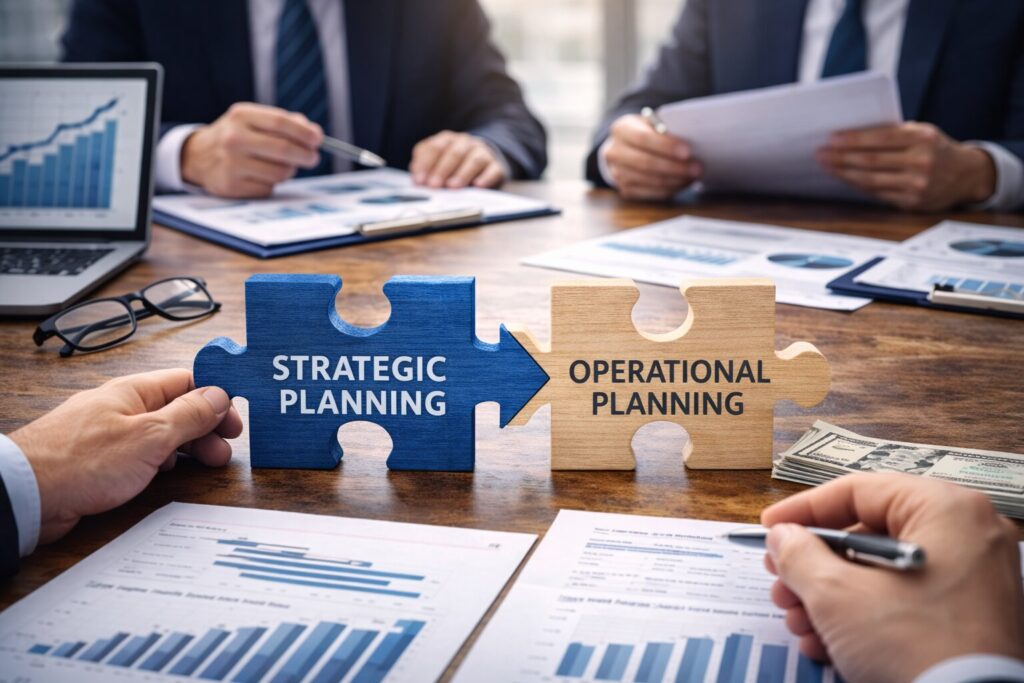
Strategic and operational planning form the structural backbone of effective organizations. Strategy defines long-term direction, competitive positioning, and ambition, while operations translate those ambitions into measurable actions and routines. When aligned properly, these two layers reinforce each other, creating clarity, discipline, and resilience. When disconnected, even the strongest strategic vision collapses under execution gaps. Sustainable performance depends not on strategy alone, but on the deliberate integration of long-term planning with everyday operational reality.
In short:
Strategic planning defines direction, priorities, and competitive positioning.
Operational planning converts strategy into structured actions and measurable targets.
Alignment between both layers prevents execution gaps.
Structured review cycles improve adaptability and accountability.
Clear communication links high-level objectives to daily performance.
Understanding strategic and operational planning at different horizons
Strategic planning typically spans multiple years and addresses questions about positioning, growth pathways, market differentiation, and capital allocation. It is forward-looking and often involves scenario analysis, competitive assessments, and long-term financial modeling.
Operational planning, by contrast, focuses on shorter timeframes. It outlines specific actions, budgets, staffing plans, and process improvements required to implement strategic intent. The operational layer translates ambition into tasks, timelines, and performance metrics.
The distinction lies primarily in time horizon and abstraction. Strategy defines “where and why,” while operations define “how and when.”
Why strategic clarity alone is not enough
Many organizations invest significant effort in developing strategic roadmaps yet struggle with implementation. A well-articulated strategy that fails to influence operational decisions becomes symbolic rather than functional.
Execution gaps often arise when departmental plans are developed independently of overarching priorities. Without structured alignment, resource allocation may drift away from strategic objectives.
Bridging this gap requires deliberate integration. Strategic and operational planning must be designed as interconnected processes rather than separate exercises.
Also interesting



The core components of effective strategic planning
Strategic planning typically includes several key elements: defining mission and vision, analyzing competitive positioning, assessing market trends, and setting long-term financial objectives.
Competitive analysis provides insight into differentiation opportunities. Scenario modeling anticipates potential market shifts and prepares contingency responses. Clear prioritization ensures focus rather than diffusion of effort.
As frequently discussed on TheStrategyWire.com, strong strategy balances ambition with realism. It must be bold enough to inspire but grounded enough to execute.
Translating strategy into operational plans
Operational planning converts strategic priorities into specific initiatives, milestones, and performance indicators. Each strategic objective should correspond to measurable operational actions.
For example, if a strategic goal is market expansion, operational plans might include recruitment timelines, marketing campaigns, infrastructure investments, and budget allocations.
Clear linkage between objectives and actions prevents ambiguity. Without this translation process, teams may lack direction despite having a defined strategy.
A step-by-step framework for aligning strategy and operations
A structured approach strengthens alignment:
Define three to five core strategic priorities.
Break each priority into measurable annual objectives.
Translate annual objectives into quarterly operational targets.
Assign clear ownership and accountability for each initiative.
Establish performance indicators and reporting cycles.
Conduct periodic reviews to adjust based on results and changing conditions.
This cascade model ensures coherence from long-term ambition to daily activity.
“Align every operational decision with strategic intent, and execution will become your strongest competitive advantage.”
The role of financial planning in strategic and operational alignment
Financial planning acts as the connective tissue between strategic and operational layers. Budgets allocate resources according to priorities, reinforcing commitment to strategic direction.
Capital expenditure decisions, hiring plans, and investment allocations must reflect strategic focus areas. Misalignment between budget and strategy often signals underlying governance issues.
Cash flow planning and capital allocation frameworks further ensure that operational initiatives remain financially sustainable.
Avoiding common pitfalls in strategic and operational planning
One frequent mistake is excessive complexity. Overly detailed strategies may overwhelm operational teams, leading to disengagement.
Another issue is rigidity. Markets evolve, and static plans quickly lose relevance. Incorporating structured flexibility allows adaptation without abandoning core direction.
A final pitfall is inadequate communication. Even the best-designed plans fail if stakeholders do not understand how their roles contribute to overarching objectives.
Governance structures that reinforce planning discipline
Effective governance ensures that planning remains a continuous process rather than an annual ritual. Regular review meetings, performance dashboards, and accountability frameworks sustain momentum.
Executive leadership plays a crucial role in modeling discipline. When leadership treats operational metrics as strategic signals, alignment strengthens across the organization.
Clear documentation of decisions and progress further enhances transparency and credibility.
Also interesting



Integrating performance measurement systems
Performance measurement systems operationalize strategy. Key performance indicators (KPIs) should reflect strategic priorities rather than generic metrics.
Balanced scorecards, for instance, combine financial, operational, and strategic indicators into a coherent framework. This approach prevents overemphasis on short-term financial outcomes at the expense of long-term positioning.
Alignment between KPIs and strategic goals reinforces accountability and clarifies expectations.
Building adaptability into planning processes
Strategic and operational planning must accommodate uncertainty. Rolling forecasts and scenario planning enhance flexibility without sacrificing structure.
Regular reassessment of assumptions ensures relevance. For example, shifts in customer demand or regulatory landscapes may require operational adjustments.
Adaptability does not mean abandoning discipline; it means updating plans in response to evidence while preserving strategic coherence.
Leadership responsibilities in planning integration
Leadership sets the tone for alignment. Executives must communicate strategic intent clearly and ensure that operational decisions reflect those priorities.
Cross-functional collaboration strengthens integration. When finance, operations, marketing, and strategy teams coordinate planning efforts, silos diminish.
Leadership commitment to transparency and accountability reinforces credibility and encourages engagement at all levels.
Cultural alignment and execution excellence
Planning processes are only as effective as the culture supporting them. A culture of accountability ensures that operational targets are treated seriously.
Encouraging open dialogue about performance gaps fosters learning rather than blame. Continuous improvement becomes embedded within daily routines.
Organizations that align culture with structured planning frameworks achieve more consistent and sustainable results.
Linking long-term vision to daily performance
Strategic and operational planning ultimately serve the same objective: translating vision into tangible outcomes. Clear communication about how daily tasks contribute to long-term ambition strengthens engagement.
Regular progress reviews create visibility into achievements and challenges. This visibility reinforces momentum and clarifies direction.
Alignment transforms strategy from abstract aspiration into lived organizational practice.
Continuous refinement and learning
Planning should evolve based on experience. Post-project evaluations, performance analyses, and stakeholder feedback inform improvements in both strategic formulation and operational execution.
Learning loops enhance precision over time. Structured reflection identifies patterns that improve future planning cycles.
By viewing strategic and operational planning as dynamic, iterative processes, organizations cultivate resilience and long-term competitiveness.

Ethan Clarke
Ethan Clarke is a business strategist and technology writer with a passion for helping entrepreneurs navigate a fast-moving digital world. With a background in software development and early-stage startups, he blends practical experience with clear, actionable insights. At TheStrategyWire.com, Ethan explores the intersection of entrepreneurship, AI, productivity, and modern business tools