
Home » Alle berichten » Finance » What is raising capital and how it shapes long-term business growth
What is raising capital and how it shapes long-term business growth
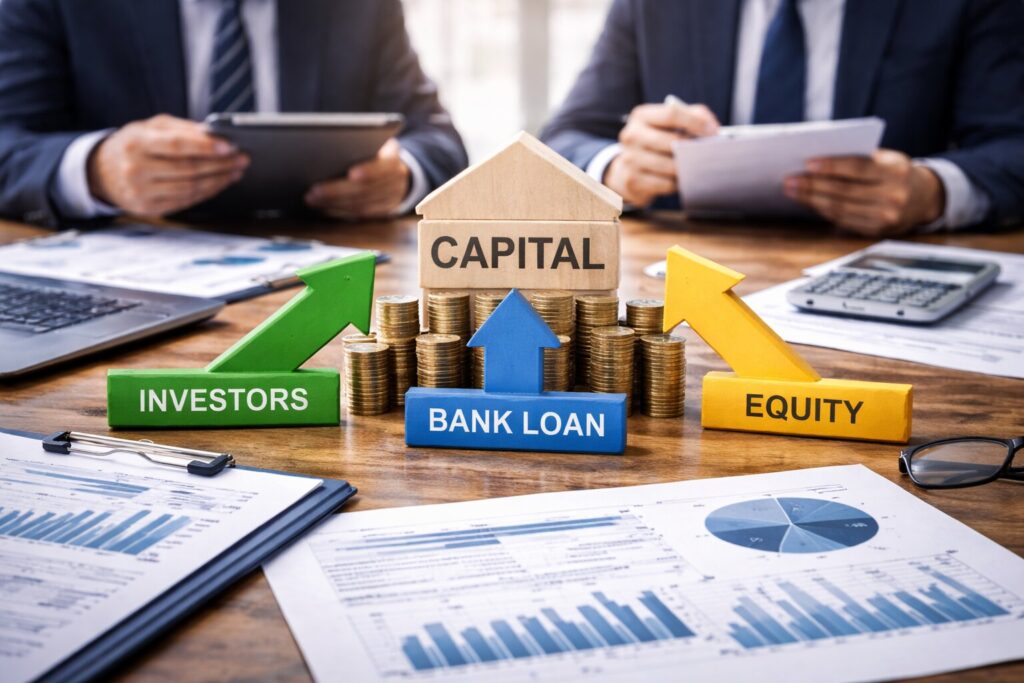
What is raising capital? At its core, raising capital is the process of securing financial resources from external sources to fund operations, expansion, innovation, or strategic initiatives. It can involve issuing equity, taking on debt, or combining multiple financing instruments. While often associated with high-growth ventures, raising capital is a broader strategic tool used by organizations to strengthen balance sheets, accelerate projects, and manage liquidity in a disciplined manner.

In short:
Raising capital means obtaining external funding to support growth or stability.
Capital can be sourced through equity, debt, or hybrid instruments.
Preparation and positioning significantly influence funding outcomes.
The structure of capital affects control, risk, and long-term flexibility.
A strategic approach aligns funding decisions with sustainable growth objectives.
Understanding what raising capital really means
When examining what raising capital entails, it is important to look beyond the act of receiving funds. It represents a strategic decision that alters ownership structure, financial risk, and future obligations. Every capital raise reshapes the organization’s financial architecture.
Equity financing involves selling ownership stakes in exchange for funding. This dilutes existing shareholders but does not require repayment. Debt financing, by contrast, preserves ownership but introduces repayment obligations and interest costs.
The choice between these options reflects a broader assessment of risk tolerance, growth potential, and cash flow predictability. Raising capital is therefore not merely transactional; it is structural.
Why organizations choose to raise capital
Capital is often raised to finance expansion initiatives, such as entering new markets, developing products, or acquiring competitors. In other cases, it may support working capital needs or fund research and development.
Timing plays a critical role. Raising funds during periods of strong performance typically results in more favorable terms. Conversely, seeking capital under financial distress may reduce negotiating leverage.
Strategic foresight allows organizations to anticipate capital needs rather than reacting to short-term constraints. This proactive approach strengthens credibility with potential investors and lenders.
Also interesting



Key methods used in raising capital
There are three primary categories of capital raising: equity, debt, and hybrid instruments. Equity financing may include private placements, venture capital, or public offerings. Investors receive ownership interests and potential future dividends or capital gains.
Debt financing involves loans, bonds, or credit facilities. These arrangements require repayment but preserve shareholder control. Interest rates and covenants define financial obligations and flexibility.
Hybrid instruments, such as convertible notes or preferred shares, blend features of both equity and debt. They offer structured flexibility but require careful negotiation and documentation.
A step-by-step framework for raising capital effectively
A structured approach improves funding outcomes. Consider the following framework:
Clarify the purpose of the capital raise and define the required amount.
Prepare detailed financial projections and scenario analyses.
Assess valuation expectations and potential dilution impact.
Identify suitable funding sources aligned with strategic objectives.
Develop a compelling investment narrative supported by data.
Conduct negotiations with transparency and structured documentation.
Plan for post-funding governance and reporting obligations.
This disciplined progression reduces uncertainty and enhances investor confidence.
How valuation influences capital raising decisions
Valuation is central when raising capital through equity. A higher valuation reduces dilution but must remain defensible. Overvaluation can damage credibility and complicate future funding rounds.
Valuation typically reflects revenue growth, profitability, market position, and competitive differentiation. Investors also assess management capability and risk exposure.
Negotiation requires balancing immediate capital needs with long-term ownership implications. A slightly lower valuation may be acceptable if it attracts strategically valuable partners.
“Raise capital not just to fund growth, but to strengthen the foundation that makes growth sustainable.”
The impact of capital structure on long-term flexibility
Capital structure—the proportion of debt and equity—directly influences financial resilience. Excessive debt increases leverage and repayment pressure. Excessive equity dilution may weaken founder control or decision authority.
A balanced structure supports growth while maintaining manageable risk. Interest coverage ratios, cash flow stability, and asset backing all influence sustainable leverage levels.
Thought leadership platforms such as TheStrategyWire.com frequently emphasize that capital structure should evolve alongside strategic maturity rather than remain static.
Investor expectations and governance implications
Raising capital introduces new stakeholders with defined expectations. Equity investors often require board representation, reporting transparency, and strategic input.
Debt providers may impose financial covenants or performance thresholds. These conditions shape operational decision-making.
Understanding these governance implications before finalizing agreements prevents friction later. Capital is never free of expectations, even when repayment is not immediate.
Communicating your capital strategy effectively
Clarity in communication is vital. Investors evaluate not only financial metrics but also the credibility of leadership and strategic coherence.
A strong capital narrative explains why funds are required, how they will be deployed, and what measurable outcomes are expected. Transparency regarding risks strengthens trust.
Consistency in messaging across presentations, financial statements, and negotiations reinforces professionalism and confidence.
Also interesting

Risk considerations when raising capital
Every capital raise introduces risk. Equity financing may dilute control and create alignment challenges. Debt financing may strain cash flow during downturns.
Scenario analysis helps anticipate potential disruptions. Modeling worst-case cash flow outcomes ensures that obligations remain manageable.
Diversifying funding sources reduces dependence on a single capital provider and enhances stability during economic volatility.
Timing and market conditions
Market conditions significantly influence capital availability and pricing. Favorable economic environments often increase investor appetite and improve valuation multiples.
Conversely, during downturns, risk aversion rises and funding becomes more selective. Organizations must assess both internal readiness and external market sentiment.
Strategic timing enhances negotiation power. Raising capital when performance indicators are strong positions the organization advantageously.
Preparing for due diligence
Due diligence is a rigorous examination of financial records, legal compliance, operational systems, and risk exposure. Preparation reduces delays and builds trust.
Creating organized documentation, audited statements, and transparent reporting systems strengthens credibility. Weak preparation can lead to renegotiation or withdrawal of interest.
Operational stability during due diligence is equally critical. Performance deterioration may alter perceived value.
Post-funding accountability and performance tracking
Securing funding marks the beginning of a new accountability phase. Investors expect regular reporting and measurable progress against stated objectives.
Establishing clear performance metrics ensures alignment between capital deployment and strategic outcomes. Transparent communication builds long-term relationships with stakeholders.
Responsible stewardship of raised capital enhances reputation and facilitates future financing opportunities.
Aligning capital raising with long-term strategy
Understanding what raising capital means requires a long-term perspective. Funding decisions should align with broader strategic goals rather than short-term financial gaps.
Capital should enable sustainable growth, operational improvement, or strategic repositioning. Misaligned funding can create structural challenges that outlast the immediate benefits.
Thoughtful alignment between capital structure, governance, and strategic direction strengthens resilience and competitive positioning.

Ethan Clarke
Ethan Clarke is a business strategist and technology writer with a passion for helping entrepreneurs navigate a fast-moving digital world. With a background in software development and early-stage startups, he blends practical experience with clear, actionable insights. At TheStrategyWire.com, Ethan explores the intersection of entrepreneurship, AI, productivity, and modern business tools