
Home » Alle berichten » Finance » What is source capital and why it matters in financial strategy
What is source capital and why it matters in financial strategy
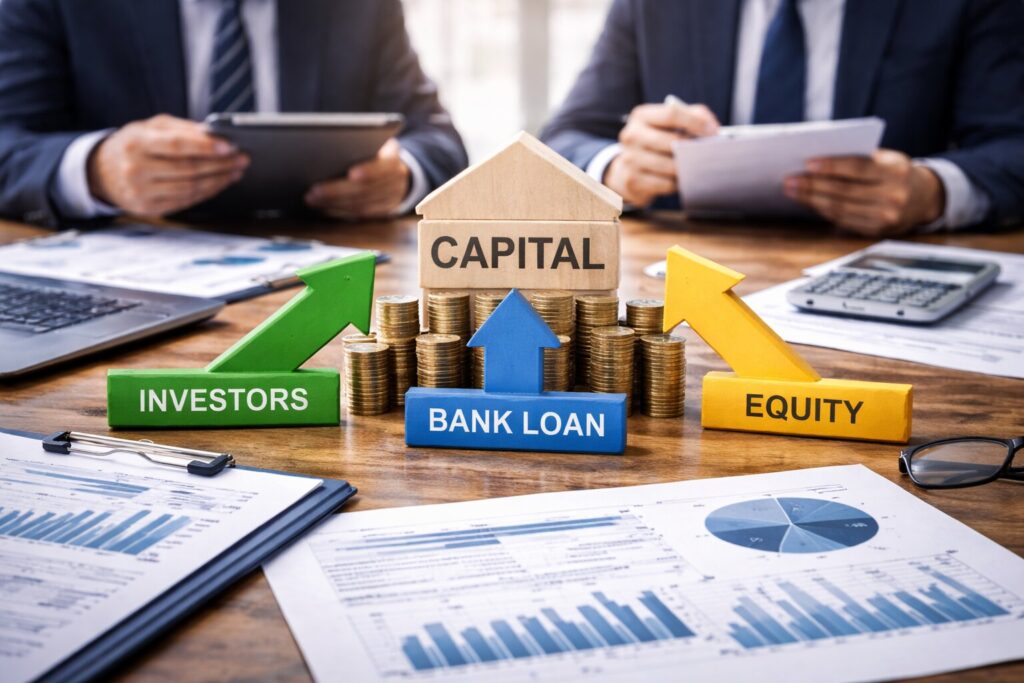
What is source capital? In practical terms, source capital refers to the origin of funds that finance a company’s operations, investments, and growth initiatives. It encompasses the different channels through which financial resources enter an organization, including equity contributions, retained earnings, debt financing, and alternative funding instruments. Understanding the concept of source capital is essential for evaluating financial stability, strategic flexibility, and long-term sustainability in any structured business environment.
In short:
Source capital refers to the origins of funds used to finance operations and growth.
It includes equity, debt, retained earnings, and hybrid instruments.
The mix of capital sources shapes risk, control, and financial flexibility.
Strategic alignment between funding sources and objectives enhances sustainability.
Transparent documentation of capital origins strengthens governance and investor confidence.
Understanding what source capital really means
When asking what source capital is, it is important to look beyond a simple definition. Source capital represents the financial foundation upon which an organization builds its operations and strategy. It answers the fundamental question: where does the money come from?
Every organization relies on multiple capital sources. Founders may contribute initial equity. Profits retained over time become an internal funding source. Banks and bondholders provide debt capital, while investors may supply additional equity in exchange for ownership stakes.
The composition of source capital reflects strategic decisions about risk tolerance, growth ambition, and governance structure.
Primary categories of source capital
Broadly, source capital falls into two major categories: internal and external funding. Internal capital includes retained earnings and owner contributions. These funds typically carry no repayment obligation and preserve ownership control.
External capital includes debt and equity provided by third parties. Debt must be repaid with interest, while equity dilutes ownership but does not require repayment. Hybrid instruments, such as convertible notes or preferred shares, combine features of both.
Each category has implications for financial stability and strategic autonomy. The right combination depends on growth stage, industry dynamics, and market conditions.
Also interesting



Why understanding source capital is strategically important
The structure of source capital directly influences financial resilience. A business funded primarily through retained earnings may enjoy greater independence but limited growth speed. Conversely, heavy reliance on debt may accelerate expansion but increase financial risk.
Strategic planning requires aligning capital sources with long-term objectives. Funding long-term projects with short-term debt, for example, creates maturity mismatches and liquidity pressure.
Thought leadership platforms such as TheStrategyWire.com frequently highlight that capital structure decisions are as strategic as operational ones. Source capital shapes not only financial statements but also decision-making flexibility.
Evaluating internal sources of capital
Internal capital is often underestimated. Retained earnings represent profits reinvested into the business rather than distributed. This form of source capital signals operational strength and disciplined reinvestment.
Owner contributions and accumulated reserves provide stability during economic volatility. Internal funding also avoids the scrutiny and governance constraints often associated with external investors.
However, reliance solely on internal capital may limit scalability. Growth opportunities requiring significant upfront investment may exceed internally generated resources.
Assessing external source capital options
External capital expands financial capacity. Debt financing provides access to funds without diluting ownership but introduces repayment obligations and covenant requirements.
Equity financing brings capital without repayment pressure but may alter control dynamics. Investors often expect strategic input and performance transparency.
Choosing between these options requires analyzing projected cash flows, risk exposure, and governance implications. The optimal mix evolves as the organization matures.
“Choose your capital sources as carefully as you choose your strategy, because one will ultimately determine the success of the other.”
A step-by-step approach to analyzing your source capital structure
A structured evaluation process enhances clarity:
Map all existing funding sources, including equity contributions, retained earnings, and outstanding debt.
Assess cost of capital for each source, including interest rates and expected equity returns.
Evaluate maturity timelines and repayment obligations.
Analyze ownership dilution and governance implications.
Model stress scenarios to test financial resilience.
Align capital structure with strategic growth plans.
This systematic review ensures that source capital supports rather than constrains strategic ambitions.
Cost of capital and risk implications
Each source of capital carries a cost. Debt involves explicit interest payments, while equity implies expected returns demanded by investors. Even retained earnings have an opportunity cost, as funds could have been distributed or invested elsewhere.
Balancing cost and risk is critical. Excessively cheap capital may come with restrictive conditions. Higher-cost equity may offer flexibility during downturns.
Evaluating weighted average cost of capital provides a comprehensive view of financial efficiency and sustainability.
Governance and control considerations
Source capital influences governance structure. Equity investors may require board representation, voting rights, and strategic oversight.
Debt providers may impose financial covenants, limiting operational flexibility if breached. These constraints shape decision-making autonomy.
Understanding governance implications before accepting capital reduces friction and ensures alignment between funding partners and strategic direction.
Also interesting


Matching source capital to growth stage
Early-stage ventures often rely heavily on equity, as predictable cash flow may not yet support debt financing. As operations stabilize, debt can supplement equity to optimize capital efficiency.
Mature organizations may shift toward retained earnings and structured financing instruments to maintain flexibility while controlling dilution.
Aligning source capital with lifecycle stage prevents structural imbalance and supports sustainable expansion.
Transparency and reporting in capital management
Clear documentation of capital sources strengthens credibility with investors, lenders, and regulators. Transparent reporting enhances trust and facilitates future funding rounds.
Regular review of capital structure ensures adaptability to changing market conditions. Periodic communication about capital strategy reinforces confidence among stakeholders.
Transparency transforms source capital from a static accounting entry into a dynamic governance tool.
Strategic diversification of capital sources
Relying excessively on a single source of capital increases vulnerability. Diversification reduces dependence and enhances negotiation leverage.
For example, combining moderate debt with retained earnings and selective equity participation can balance risk and flexibility. Access to multiple funding channels improves resilience during market shifts.
Strategic diversification also signals financial sophistication and prudent risk management.
Common misconceptions about source capital
One misconception is that equity is always safer than debt. While equity does not require repayment, it can significantly dilute ownership and influence strategic control.
Another misconception is that internal capital is cost-free. Retained earnings represent foregone distributions and carry opportunity costs.
Understanding these nuances enables more informed capital allocation decisions.
Aligning source capital with long-term vision
Capital decisions should align with overarching strategic objectives. If expansion into new markets requires flexibility and patience, equity may provide suitable support. If stable cash flows exist, structured debt may enhance returns.
Long-term planning ensures that funding choices do not undermine future adaptability. Strategic coherence between capital sources and growth ambitions enhances organizational resilience.
On platforms like TheStrategyWire.com, financial leadership discussions increasingly emphasize the integration of capital structure with strategic roadmap design.
Continuous review and adaptation of capital sources
Source capital should not remain static. Economic conditions, regulatory environments, and competitive landscapes evolve. Periodic reassessment ensures that funding structures remain appropriate.
Regular financial modeling and stress testing reveal potential vulnerabilities before they escalate. Adaptive capital management strengthens confidence and preserves strategic momentum.
By treating source capital as an active component of financial strategy, organizations enhance both stability and growth potential.

Ethan Clarke
Ethan Clarke is a business strategist and technology writer with a passion for helping entrepreneurs navigate a fast-moving digital world. With a background in software development and early-stage startups, he blends practical experience with clear, actionable insights. At TheStrategyWire.com, Ethan explores the intersection of entrepreneurship, AI, productivity, and modern business tools